Living Room Furniture Layout Rules
Living room layout rules with real dimensions: conversation distances, sofa and rug placement, TV mounting height, plus five layout templates.
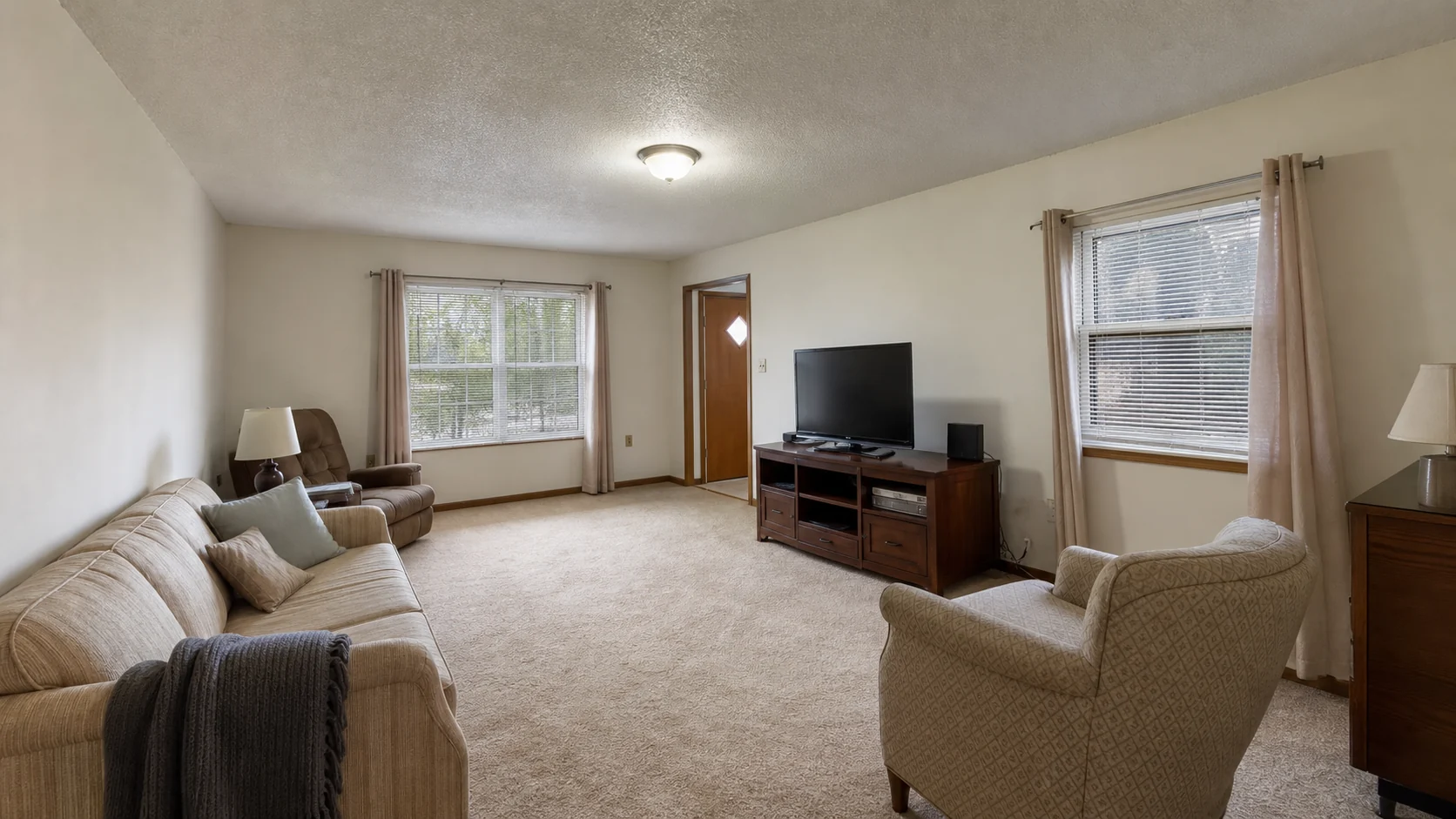
Most living rooms fail in one of two ways: the seating is pushed flat against the walls so nobody can actually talk, or everything is crammed into the center with no room to walk. Both come from skipping a few dimensional rules. This page gives the numbers and the proven layout templates that interior designers reuse, so you can arrange a living room that supports conversation, traffic, and a comfortable view of the screen.
Every rule below is a measurement you can check, not a vibe. Use it to plan a room or to verify a layout before you commit to buying or rearranging.
The short answer: the rules that fix most living rooms
These four rules solve the majority of awkward living rooms on their own.
| Rule | Target | Why |
|---|---|---|
| Conversation distance | 3.5-8 ft / 107-244 cm seat-to-seat | Close enough to talk, not shouting |
| Float the seating | Pull sofas 3-12 in / 8-30 cm off the wall | Defines a room within a room |
| Rug under the front legs | All seating front legs on the rug | Anchors the group, looks intentional |
| TV at eye level | Center 42-48 in / 107-122 cm from floor | Comfortable seated viewing |
Conversation area distances
A living room’s primary job is conversation, and conversation has an ergonomic sweet spot.
- Seat-front to seat-front: keep facing or angled seating between 3.5 and 8 feet (107 and 244 cm) apart. Inside that range people can talk at a normal volume and read each other’s expressions.
- Coffee table within reach: the table should sit 16 to 18 inches (41 to 46 cm) from the seat fronts, close enough to set down a drink without standing.
- Group, do not line up: an L-shape or a facing pair reads as a conversation area; a single row of chairs along a wall reads as a waiting room.
- One focal point per group: orient the seating toward one anchor, whether that is a fireplace, a window, or the TV, rather than splitting attention between two.
Sofa and seating placement
Where the sofa sits sets the entire room.
- Float it when the room allows. Pulling a sofa even 3 to 12 inches (8 to 30 cm) off the wall makes a room feel intentional rather than lined. In a small room, against the wall is fine.
- Leave a walkway behind a floated sofa: 30 inches (76 cm) if anyone passes behind it.
- Largest piece first, on the longest wall or the focal wall. Everything else arranges around it.
- Balance visual weight. A heavy sectional on one side wants a substantial counterweight, like a pair of chairs or a tall bookcase, on the other.
TV placement dimensions
TV height and distance are where guesswork shows most, because a TV mounted too high is a daily strain.
- Mounting height: the center of the screen should land at roughly seated eye level, about 42 to 48 inches (107 to 122 cm) from the floor for most seating. Measuring from your own seated eye line is more accurate than a fixed number.
- Viewing distance: roughly 1.5 to 2.5 times the screen’s diagonal. For a 55 inch TV that is about 7 to 11 feet (210 to 335 cm); for a 65 inch TV, about 8 to 13 feet (245 to 400 cm).
- Above a fireplace: only if seated eye level genuinely reaches the lower part of the screen. A TV mounted high over a tall mantel forces a neck-up angle that gets uncomfortable fast.
- Glare check: keep the screen out of the direct line of windows, or plan for shades, so daytime reflections do not wash out the picture.
Rug placement rules
The rug is the most common living-room mistake, and the fix is almost always to size up.
- Front legs on, at minimum. Every seating piece in the group should have at least its front legs on the rug. A rug that touches nothing makes the furniture look like it is drifting.
- All legs on, ideally. If the room allows, the rug should extend 12 to 18 inches (30 to 46 cm) beyond the sofa on the sides for a fully anchored look.
- Leave a border. Keep 8 to 24 inches (20 to 61 cm) of bare floor between the rug edge and the walls so the rug frames the space rather than carpeting it.
Five layout templates that work
These are the arrangements designers reach for first. Match one to your room’s shape.
- Symmetrical focal: sofa facing the fireplace or TV, with two matching chairs opposite or flanking. Best for square or formal rooms.
- L-shaped conversation: a sofa plus a perpendicular loveseat or chairs, sharing a corner. Best for open-plan corners and family rooms.
- Facing sofas: two sofas facing each other across a coffee table, focal point at one end. Best for long rooms and conversation-first spaces.
- Sectional anchor: a sectional defining one side, with a pair of chairs balancing the other. Best for casual, media-heavy rooms.
- Floating in a great room: the whole group pulled into the center on a large rug, backs defining the edge of the living zone in an open plan. Best for open-concept spaces that need a visual boundary.
When the rules do not fit
Rooms with constraints override the ideals, and that is normal.
- Small living rooms under 150 square feet: push the sofa to the wall, drop the second sofa for a pair of chairs or a bench, and prioritize one clear walkway over the float.
- Pass-through rooms: if a main traffic path crosses the space, route it behind the seating, not through the conversation area, even if that means a smaller group.
- Multi-focal rooms: a room with both a fireplace and a TV usually has to choose a primary focal point or angle the seating to favor one while keeping the other in view.
- AI-generated living rooms: generated layouts often place a sofa unreachably far from the coffee table or shrink walkways to fill the frame. Measure the conversation distance and the walkways against the rules above before trusting the image.
Frequently asked questions
How far apart should living room seating be? Between 3.5 and 8 feet (107 and 244 cm) seat-front to seat-front. Inside that range a conversation feels natural; beyond about 8 feet the group stops feeling connected.
How high should a TV be mounted in a living room? The center of the screen should sit near seated eye level, roughly 42 to 48 inches (107 to 122 cm) from the floor for most sofas. Measure from your own seated eye line for the most comfortable result.
Should a living room sofa go against the wall? In a small room, yes. In a larger room, floating the sofa 3 to 12 inches (8 to 30 cm) off the wall makes the space feel more intentional, as long as you leave a 30 inch (76 cm) walkway behind it.
What size rug should a living room have? Large enough for at least the front legs of all seating to rest on it, which usually means an 8x10 foot (244x305 cm) rug or larger. Sizing up to get all legs on looks more deliberate.
How far should I sit from the TV? About 1.5 to 2.5 times the screen’s diagonal. For a 55 inch TV that is roughly 7 to 11 feet (210 to 335 cm). Sit closer for 4K detail and farther for a more relaxed view.
Building the layout
Place the largest piece first, set the conversation distance, anchor the group with a rug, then fix the TV height and distance last. Every awkward living room can usually be traced to one of those four steps being skipped.
For the full set of clearance numbers, see the furniture spacing and clearance guide, and for choosing colors once the layout is set, see the interior color palette ratios guide. To try a new arrangement on your own room photo, open the Studio.
Test the direction on your own room
The guest path creates one public, watermarked 1K preview after explicit consent. Sign in and use Credits when the room needs to stay private or you want to refine versions.
Open Studio