Bedroom Layout Clearance Guide
Bedroom layout planning: nominal U.S. mattress footprints, room-specific clearance checks, and measurement steps for nightstands, dressers, doors, and closets, in inches and cm.
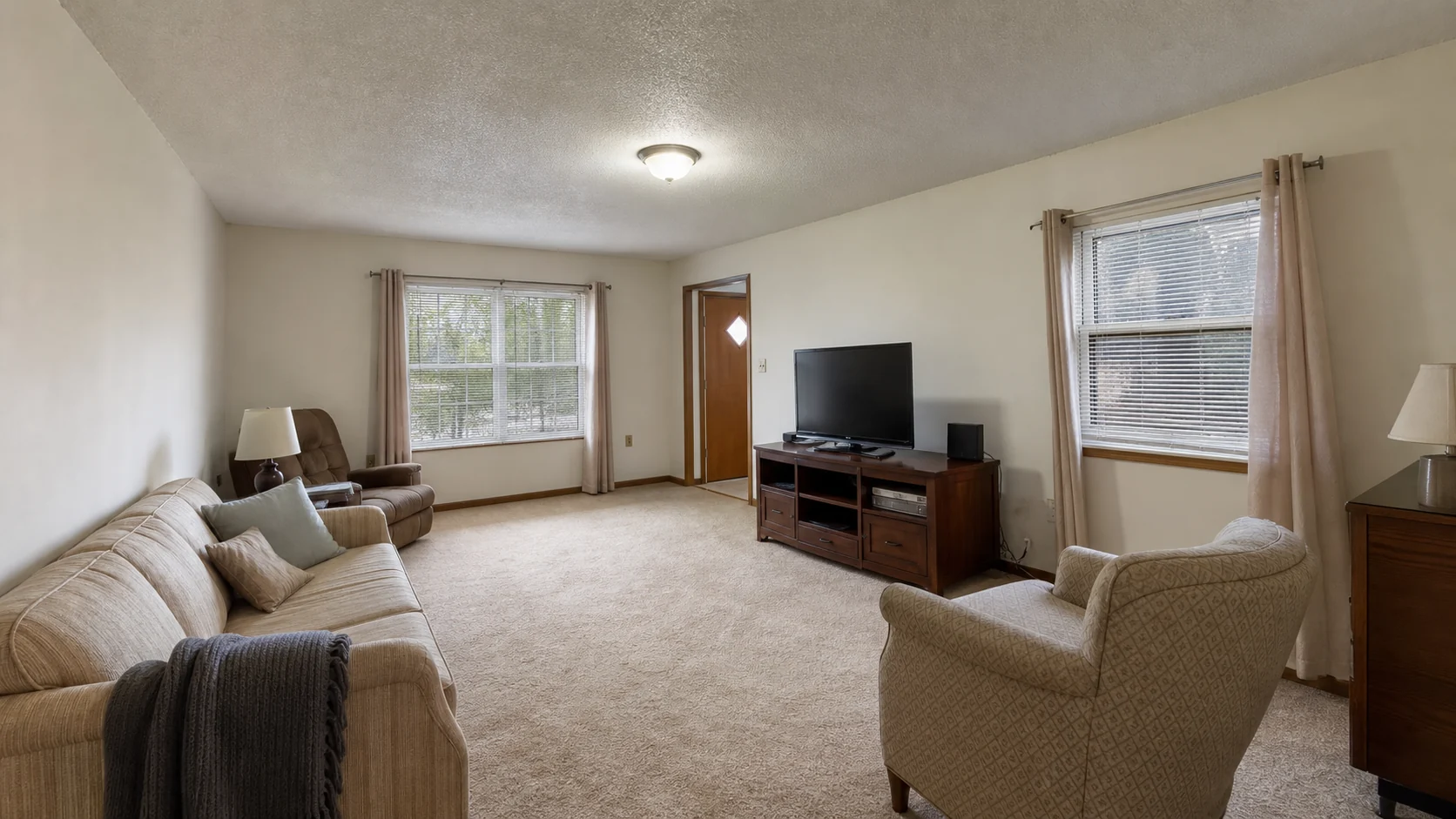
A bedroom layout is a measurement problem before it is a styling problem. A bed can be beautiful and the palette can be perfect, but if the route to the closet or the door swing is blocked, the room fights you every day. This page separates nominal mattress footprints from room-specific clearance checks for a real bedroom.
There is no four-number test that guarantees a bedroom layout will work. The useful gap depends on the bed frame, doors, drawers, furniture, occupants, and any local or accessibility requirements that apply. Where a number appears below, it is either linked to a named mattress-size reference or shown as a worked example with its assumptions; it is not a universal minimum or construction approval.
Plan clearances by measuring actual use
Start with the furniture and the routes people will actually use. Measure the widest projecting edges, not centre lines, and repeat the check with doors, drawers, chairs, and the bed in use.
| Check | Measure this | What the result tells you |
|---|---|---|
| Route beside the bed | Clear floor from the bed or frame edge to the nearest obstruction | Whether the intended person can get in, out, and around the bed |
| Space at the foot | Clear floor from the frame or footboard to the opposite obstruction | Whether someone can cross, turn, or use furniture there |
| Dresser use | The distance from the dresser front with its largest drawer fully open to the nearest obstruction | Whether the drawer can be used while someone stands in front of it |
| Door and closet swing | The full swing arc, including the handle and any projecting furniture | Whether the door can open and the route remains usable |
Worked example — explicit assumptions, not a minimum
Suppose a nominal Queen mattress is 60 x 80 inches (152 x 203 cm). For a simple planning sketch, assume a hypothetical frame extends 4 inches (10 cm) beyond the mattress on all four sides, one single-user route is 30 inches (76 cm) along one long side, and the foot crossing is 36 inches (91 cm). The assumed frame footprint is 68 x 88 inches (173 x 224 cm); adding those two example routes produces a rough 98 x 124 inch (249 x 315 cm) rectangle, or about 8 ft 2 in x 10 ft 4 in, before nightstands, doors, closets, windows, or other furniture.
That arithmetic is a way to expose the assumptions that need checking. It is not a minimum room size, a guarantee of comfort, or an accessibility or building-code test. Replace every assumed number with the actual frame, furniture, room, and applicable requirements before buying.
Nominal U.S. mattress sizes
The table below uses rounded nominal U.S. mattress labels, not bed-frame dimensions. It follows Sealy’s U.S. mattress-dimensions reference, which notes that individual models can vary. Check the exact mattress and frame specification before drawing the layout.
| Bed size | Mattress (in) | Mattress (cm) |
|---|---|---|
| Twin | 38 x 75 | 96 x 191 |
| Twin XL | 38 x 80 | 96 x 203 |
| Full / Double | 54 x 75 | 137 x 191 |
| Queen | 60 x 80 | 152 x 203 |
| King | 76 x 80 | 193 x 203 |
| California King | 72 x 84 | 183 x 213 |
A King is wider than a California King; a California King is longer. Those nominal labels do not decide which one fits: use the exact product dimensions and the measured routes in the room.
Why there is no minimum-room table
A mattress footprint alone cannot determine a universal room size. The frame, bedside furniture, door and closet swings, windows, dresser depth, route, number of occupants, and any applicable local or accessibility requirements all change the result. The worked example above is more useful than a fixed “comfortable” or “tight” table because its assumptions are visible and replaceable.
Nightstand and dresser sizing
Side furniture needs to be checked against the actual bed, product dimensions, and route rather than a generic range.
- Nightstand height: compare the top of the table with the top of the actual mattress, then try the lamp, phone, and drawer from the bed.
- Nightstand width: measure the available wall and the nearby door or closet swing; use the exact product width rather than assuming a bed-size rule.
- Dresser depth: record the product depth and the full drawer travel, then measure from the open drawer to the nearest obstruction while standing in front of it.
- Bench at the foot of the bed: measure its actual width and height, mark the footprint on the floor, and recheck the route with the bench in place.
Placement rules that prevent regret
A few placement habits separate a restful bedroom from an awkward one.
- Center the bed on the longest unbroken wall when possible, so both sides stay symmetrical and accessible.
- Keep the bed off the wall the door is on if you can; walking into the side of a bed at the entrance makes a room feel smaller.
- Do not block a window with the headboard if the window is low; a high headboard in front of a low window cuts the light and the proportions.
- Leave the closet and door swings completely clear. A dresser that blocks half a closet door is a daily friction point that no styling fixes.
When a plan needs compromise
Real bedrooms force compromises, and the right trade-off depends on who uses the room and what must remain accessible.
- Small bedrooms: protect the route that matters most for the people who use it, then test the remaining gaps with the actual furniture. Do not treat a short route as automatically acceptable.
- Shared bedrooms: check each person’s bedside route and the route to the door; symmetry is secondary to being able to use the room.
- Sloped ceilings and attics: measure usable headroom where someone walks and sits, not just at the peak. Check any applicable local requirements separately.
- AI-generated bedrooms: an image can change perspective, scale, or furniture geometry. It is a visual direction, not a measuring instrument or proof of fit, accessibility, or code compliance. Measure the real room and products independently.
Frequently asked questions
What size room do I need for a Queen bed? There is no single minimum answer. Start with the nominal 60 x 80 inch (152 x 203 cm) mattress footprint, replace it with the exact frame dimensions, then measure the side route, foot route, furniture, and door or closet swings. The worked example above shows one set of assumptions; it is not a guarantee that any Queen will fit.
How much space should be on each side of a bed? There is no universal number that works for every room or person. Measure from the widest frame edge to the nearest obstruction with the bed made, then repeat with doors and drawers open and the intended person using the route. If an accessibility, exit, or other regulated route is involved, check the applicable requirement for that place instead of using this guide as a substitute.
What is the difference between a King and a California King? A nominal King is wider (76 x 80 inches / 193 x 203 cm), while a California King is longer and narrower (72 x 84 inches / 183 x 213 cm). Verify the exact model and frame dimensions; choose based on the sleepers, product, and room measurements rather than a general preference rule.
How high should a nightstand be? Compare its top with the actual mattress top and test the lamp, phone, and drawer from the bed. The useful height depends on the bed, mattress, table, and the person using it, so this guide does not set a fixed range.
Can a King bed fit in an 11 x 12 foot room? The room dimensions alone cannot answer that. Mark the exact frame footprint, trace the door and closet swings, place any nightstands or dressers, and measure the routes with the furniture in use. A drawing that looks workable in an AI image still needs this physical check.
Putting a bedroom layout together
Start with the exact bed and frame dimensions, mark the footprint on the floor, trace the door and closet swings, and measure the routes with the furniture in use. Protect the route that matters to the people using the room before adding nightstands, dressers, or a bench.
For adjacent furniture-spacing checks, see the furniture spacing and clearance guide, and for color decisions once the layout is set, see the interior color palette ratios guide. To compare a visual direction on your own photo, open the Studio; its generated image cannot verify the room’s dimensions or requirements.
Test the direction on your own room
The guest path creates one public, watermarked 1K preview after explicit consent. Sign in and use Credits when the room needs to stay private or you want to refine versions.
Open Studio